Showing posts with label sustainable living. Show all posts

Sunday, March 5, 2017

The Edges of Life

When Wolf was small we noticed that he had an inclination toward violent play (as many little boys do). So we taught him the law of the jungle: one may only kill for two reasons, either for food, or to avoid being killed yourself. (This may have slightly backfired when, at five years old, he asked if we could please shoot--and eat--a songbird in the front yard, and I had to explain that it was too small to provide enough meat to be worth eating. He was terribly disappointed.) But I digress.

For the last two years we have been raising chickens. We are in it for the eggs, and we have quite a flock of happy ladies.
We knew that eventually they'd get too old to lay anymore, and we agreed from the start that when that time came we would kill them and eat them (or--since an old bird is tough and isn't great eating--put them in the crockpot to make soup or dog meals etc). However this last summer it became evident that one of our spring babies was growing up to be...not a girl. And so we had to face the prospect of slaughtering sooner than we had anticipated. I named him King Louie, because he strutted around, crowed a lot, and was destined to lose his head.
King Louie

(At this point you may be realizing that this post deals with slaughtering animals. If that bothers you feel free to stop reading. One photo shows blood but isn't graphic. I do discribe the process but it's not overly gory, and I share because the experience overall has been significant and poignant, so I hope you'll read on.)


We had no use for a roo. He eats food, he harrasses the ladies, we don't need fertilized eggs since we're eating them all anyway, and he doesn't need to defend the flock since we have that covered. So in October I sent a message to my friend who has butchered birds before, and asked if I could come over and she could teach me how. She was willing so we set a date.
Bear greeting the turkeys.

Hubby didn't happen to be available that weekend, and neither was Wolf, so I piled the younger boys into the truck and took them to my friend's house. She had a turkey that was destined for Thanksgiving dinner and the plan was to take care of Louie and her bird at the same time. Turkeys are big and strong and have to be wrestled a bit, so she'd invited another friend (also with experience) to come and help. All of us had young kids there, and we invited them to watch or help if they wanted to, but also told them that they didn't have to if they didn't want to. I feel like it's healthy to be part of the process though if you're going to be a meat eater, and to be conscientious of where our food comes from. (Bear opted to watch us kill the turkey and Eagle helped with plucking it.)

I was so glad that I slaughtered with these ladies though, because the first thing they both said to Louie as I got him out of the kennel was "thank you" and then I held him while one of them slit his throat, and as she did she was saying "thank you Louie" to him again.

It was a deeply respectful process. 
The place where we took Louie's life.

I somewhat expected to have a moment where I wanted to back out, but I never did. I didn't wield the blades but I helped hold both birds, helped with the plucking, and I cleaned out Louie's insides. We saved some of the feathers from both birds too--I don't know what I want to do with them but they are beautiful and I feel strongly about utilizing as many parts as we can. One of the ladies kept commenting about how clean Louie was so that made me feel pretty good about how we keep our flock. :)

It wasn't until afterward, when I was packing up and getting ready to come home, that I realized that Samhain was that weekend. That's the old observance of final harvest. (There's a grain harvest observance in August, a fruits/vegetables harvest observance in September, and the November observance is for harvesting animals.) I'm sure you know that Halloween has origins in the traditions about Nov 1 being the new year, and the old year dies on the 31st which is why the veil is thin between life and death and ghosts roam etc. Dia De Los Muertos as well as other ancestor-remembering traditions are celebrated at this time, and it all ties into the recognition of death as part of life, which I think is important even if I've never really been into any of those celebrations. This year we ate Louie on that day. It seemed fitting.


 ~~~~~~~~~


But the story isn't over. Because literally the night that I got home from killing Louie, I heard a crow from the coop.

And that's when we realized there was another roo.

I have to explain a bigger story here. We bought chicks in the spring from a local farm store. But in the summer one of our adult hens (from the year before) got broody. So we got her a few fertilized eggs to sit on, and she hatched three babies. So these babies were four months younger than the spring ones, hadn't reached their adult appearance yet, and thus we hadn't realized that one of them was a roo.

Until we took Louie out of the coop, and realized that he hadn't been the only one crowing.

But back to the broody hen: I was checking on her daily, and I was the first to see the tiny fluffy babies when they hatched. I was even there during one of the hatchings--I watched the mama turn this way and that, continually shifting her weight and position and slowly turning a full circle until a third little voice started cheeping with the other two. It was the first time I had ever been present for a non-human birth, and I felt something similar to the births of my siblings or children.

The longer I live, the more I realize that the edges of life are sacred, on both sides.

The transition between life and non-life is an important time, regardless of what you believe is before and/or after it. And regardless of whether the being involved is human.

We gave Chanticleer time to reach maturity of course, but this week his time was up. I had hoped to wait until the snow melted so that we could do it outside, but we've had a lot of snow this winter and finally we decided to just do it in the garage.
Chanticleer
This time it was just myself and Hubby. I opened the door of the little kennel we'd put him in and carefully grabbed his feet with one hand and around his body with the other. He flapped and wiggled a bit, but quickly calmed. I adjusted my grip to make sure it was secure.
Since Hubby hadn't done it before, he asked to hold the bird and have me wield the knife. I had expected this, and had had several months to anticipate doing it, but in the process of getting Chanticleer out some part of me had thought and hoped that maybe it wouldn't be me.


Because here is the thing about taking a life: it is easier to do if you can distance yourself from what you are doing (indeed, the farm kills I had seen in my youth seemed to be of this sort). I certainly understand the inclination to dissociate onself from the act of taking a life. But I think that it is important--even vital--to get ones head INTO the space of what is happening, rather than out of it. The end of a sentient life--as with the beginning of one--should be a mindful thing. 

And it was. 

As my husband held Chanticleer's body and feet, I pulled our sharpest knife from its sheath and circled around to face the bird. I gently took his head in my hand, feeling his neck to make sure I would make my cut at the right place. I looked him in the eye. He looked at me for a moment, and then his eye slid shut, as though he knew what was coming; as though he were resigned to it, and knew that he was filling the measure of his creation. I pulled the knife across his neck quick and deep. His death was almost instant.
We quickly tipped him in a large bucket as he bled out, continuing to hold him as his body spasmed a few times. It's disconcerting to feel a body move when you know it's dead, and I had the fleeting fear that perhaps I hadn't done my job right and he was still alive and suffering... But he was not. I did my job properly.

And that is my biggest takeaway from all of this: how to do the job properly. It's not that I've learned how to hold a bird to kill it, or where to put the knife, or that I've learned how to make sure the blood doesn't make a mess, or that I know how to pluck it quickly and cleanly and how to get the guts out. I think the most important lesson in all of this is that life matters, and that whether I am ushering someone into it or out of it, I will always do it with mindfulness and respect for the life in question.


Tuesday, March 11, 2014

Winter Gear Storage

I am currently adjusting our family of five into living in an apartment that is a little under 1000 square feet. We were already pretty minimalist about our possessions after several major moves and having to fit everything into storage. However one thing I'm still refining is fitting everything into a small space AND still being able to find what we need.

One thing we need pretty often is winter gear such as mittens, hats, scarves, and so on. The thing about this type of gear is that when a four-year-old goes out to play in the snow, his mittens get wet, so when he wants to play two hours later, he needs a second set of mittens... this makes for lots of mittens. Not to mention things like "cold weather" gear or "I'll be outside for 15 minutes" gear versus "obscenely cold weather" gear or "I'm going fishing in twenty-below" gear.

Needless to say, there is a lot of this type of gear around our house.  And for the last three or four years it has basically all just ended up in a plastic bin or box... lots of harried looking for the other mitten in the set, lots of "but I need the other hat because this one is his" and so on.

Then inspiration struck.

$11 and five minutes of effort later we have everything where we can see it. Mittens are paired with their mates, scarves, hats, earmuffs, and everything is easy to reach.


Most of these seem to be "over the door" style organizers. If you have a regular closet door, perfect! Or maybe you can hang it on the back of your entry door. If not, three little nails and a little wall space (as I did here) works pretty easily too.

Friday, February 4, 2011

Making Tallow Candles--part 1 (rendering the tallow)

We bought a half a beef last fall. They asked if we wanted the scraps, and since I believe in using every part of the animal (since it died for us, I don't want to waste any part of its life), we said yes.
I surmised that the 'scraps' would be soup bones and the like.
I was wrong.
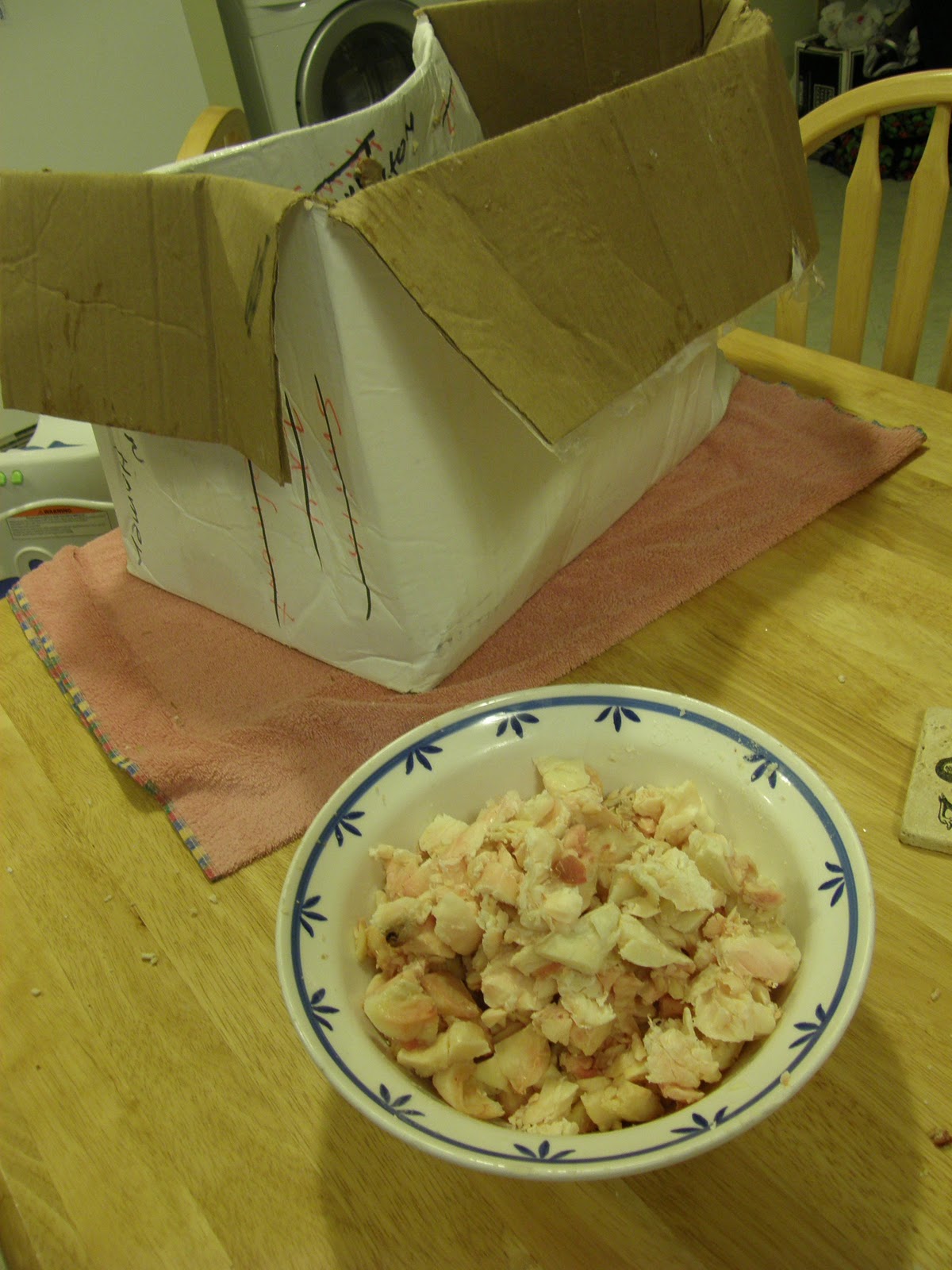
We got a box full of, well, scraps. There was some bone (which did go to make stock of course), but most of it was fat. Cows are fatty animals in case you didn't know or have forgotten (and there is nothing like a whole box full of fat to make sure that I will never ever forget!)


So what does one do with a whole bunch of cow fat? Well render it into tallow and make candles of course!

First, all that fat/gristle/unknown stuff has to be chopped into little pieces  (you can see the box there behind my bowl of bits--it was pretty full).


Second, put the bits in a big pan with some water, and boil for a loooong time until all the fat becomes liquid (keep an eye on it, because the water will boil off and then things get ugly and stinky and just generally bad...)

Pour the contents of the pan out through a strainer. BE CAREFUL, THIS STUFF IS REALLY HOT!! The things I read recommended straining twice, which I did (once with a bigger-hole metal colander and then once through a fine-mesh strainer). Once it is well strained, pour the remaining liquid--which will be murky--into a dish to separate and cool. The water and fat will separate and the fat will rise to the top and solidify. Give it at least a few hours, I have had the best results with letting it go overnight. (I put it in bread pans here, the square shape made it easier to get the tallow block out later.)

Once the tallow is solid, use a table knife to separate the tallow from the edge of the container. Dump out the water into the toilet. (The bits of tallow will clog up your sink drains, it has to go in the toilet!!) Set out the tallow to dry/drain (I put it on paper towels). It usually seems to have some gunk along it where it bordered the water, so I use the table knife to scrape that scuzzy part off and put it in the garbage or toilet.

I like to let it air out for at least a few hours before using it. If you do not have immediate plans for it, put it in a bag in the freezer.

Coming next: part 2, making the candles!!

Monday, January 31, 2011

Arctic Homestead

When I was growing up, my mother always started off our homeschool day by reading to us. She read us biographies and historical fiction mostly, counting it toward our history studies. I think I was 8 or 9 when she read Tisha to us. It was about a young woman who took a job teaching school in rural Alaska in the early 1900s.
I was fascinated.
I guess that was really the beginning for me, of wanting to come to Alaska. I re-read the book a couple of times in my teenage years too. As I was finishing college, I was contemplating getting dual certification (Alaska and my then-homestate of Washington have a reciprocal certification agreement) and I was going to come teach for a year or two in the middle of nowhere in Alaska, save up my money, and then go back south and get married. I was going to do what Tisha did...only Tisha found a spouse up in Alaska and stayed...and, well, if that happened that was ok too.
Only I found a spouse before I got a chance to go to Alaska and get rich. So I stayed poor and got married, and I'm not sure whether Alaska was still on my radar or not...I certainly wasn't thinking about it in any concrete way. But less than 4 years into our marriage we had an opportunity to move our family to Alaska, and even though we had never made serious plans to do so, we both jumped at the opportunity. Sometimes, something is so in your blood that you don't have to talk about it. I hadn't realized that my husband felt the call of the wild too, but he did, and we came.
And when we got here, we realized that it was home.

In the early part of our marriage, we had talked about buying a little piece of land where we could have a big garden, some fruit trees, and maybe raise some chickens or something. Now that we have realized that Alaska is home--more particularly that this region is where we want to stay for the long term (employment permitting)--now we have begun researching what exactly will be involved in creating an independent, sustainable, mostly-off-grid homestead for our family in this area. We've been getting books from the library, and reading up on everything from yurts and earthbag homes to cob houses and underground dwellings. We're learning about building with logs and how to use passive solar. We plan on heating with wood and geothermal energy, and will probably have a sod roof. We're reading about wind and hydropower. We know we'll need to build a greenhouse for our fruit trees and some of our vegetables. We're studying up on breeds of chickens and sheep to find which ones are gentle with children, which ones are hearty in cold weather, and which ones are the best for eating (and eggs, and wool...) The more we talk about it, the more excited we become. We know we need to sell our house down south before we can buy land here, and we don't want to buy land until we have tenure with a school district, so as to avoid what happened last time we bought a house (getting laid off and not being able to find another job within commuting distance of the place we owned!) So this is a 5 year plan at least...but it is a plan, and we are doing our reading, and it's exciting every time we talk about it.
Lots of people talk about things, but if the last few years are anything to go by, we are not just talkers, we are doers. We are the people who hold hands, hold our breath, and just jump already.

Recently, a fellow Alaskan friend recommended the book Arctic Homestead by Norma Cobb. She was another jumper. She and her husband took their five small children and settled in the wilderness north of Fairbanks in the 1970s. I admit I am not that daring, I have no desire to be that far north. I'll stay on my very sub-arctic peninsula thank you...but reading her story was inspiring, and reminded me of the reasons why I want to live off the land, with the land, in the land...and why I want to do it here. (It was also a thoroughly delightful read, so whether you have a homesteader's mindset or not I recommend the book!)


I conclude with a post from the book that seems to capture the way I feel about living in Alaska.

"There was breathtaking beauty in the howling of the wolves, the glisten and sparkle of new snow beneath lights, the splendid aurora borealis that never failed to fill me with wonder. It was as though God hung the great curtains of fire to fill space with myriad colors of dancing forms and vast spears and shafts of light flashing from one horizon to the next in a dazzling display of His power and majesty."

Friday, January 28, 2011

Frugal Friday: Water

Perhaps none of these will be anything new for you, but one way to make a little wiggle room in your budget is to lower your utility bills by cutting back on your water/electricity/gas use. Today, ideas for reducing water usage.

  • Set a timer when you shower. How long do you think you usually spend in the shower? It's very likely that it's longer than you think. Whether you're aiming for a true 5 min shower, or just wanting to take a couple of minutes off your standard, try a timer!
  • Bathe/shower with company! Seriously, most kids like to take baths together, and I've taken a baby into the shower with me more than a few times. Couples can share showers in both romantic or purely practical ways.
  • If your kids don't like to bathe together (or you have too many to fit into the tub at once), try to get them to take baths back to back, using the same tub (or perhaps just adding a little more hot for round two, but not having to refill the whole tub).
  • Don't wash your hair so often (if your hair is to your shoulders, you can probably make it at least 3-4 days between washes. My hair--to my waist--goes a week pretty easily.)
  • Use the 'short wash' cycle on your dishwasher
  • Use the smaller load size settings on your washing machine if you're running a smaller load.
  • Fill the dishwasher or washing machine full before running a load.
  • If/as things wear out, buy a more efficient washing machine or dishwasher, low-flow toilets, and low-flow showerheads.
  • If you can afford it, consider replacing inefficient things even if they have not worn out yet.
  • Install a toggle switch in your showerhead so that you can turn off the water flow (without turning off the water and losing your temperature settings). Turn it off to apply your soap/shampoo, then turn it back on to rinse... you might be surprised how much water goes straight down the drain in those seconds.
  • Strip cloth diapers with the 'boil them on the stove' method rather than the 'run them through 11 cycles in the washer' method. (I have a front loader washing machine so I have to do it this way, but I have found it faster and more effective as well as saving water. You just have to keep an eye on them so that you don't singe fabric or melt snaps!)
  • Designate specific cups or water bottles for each person (we have color-coding here, one color per family member). If your family is anything like my family, this will save several unidentified half-cupfuls of water several times a day. (We mostly stick with the colored camelbak water bottles for water, and the colored cups for milk or juice.) 
  • If you live in an area where you need to water your garden or lawn, set timers so that you don't water for longer that necessary.
  • Consider collecting rainwater from your roof into a barrel and using that (for watering plants if you don't trust it to be clean).
  • Don't flush every time ("if it's yellow--let it mellow; if it's brown--flush it down") 
  • When you have a bucketful of dirty water (from scrubbing the floor for example), set the bucket by the toilet, and pour it into the bowl to flush next time it needs flushing.
  • If you're building/remodeling, consider installing a grey water recycling system (which uses the water drained from things like your dishwasher to do things like flush the toilets). One of the simplest forms I've seen is the sink-toilet combo.  --->
What water saving ideas do you have?

Monday, November 15, 2010

My Storage (Nov 2010)


First off, the food:

My freezer has:
  • about 40 meal-size packs of salmon (caught ourselves, some smoked--also ourselves)
  • about 20 meal packs halibut (caught ourselves and from friends)
  • about 17c pumpkin puree (from our halloween pumpkins)
  • peaches (bought on sale)
  • raspberries (local, free, picked ourselves)
  • 36 cups rhubarb (local, free from a neighbor)
  • apricot marmalade (about 8 jars, but they're little repurposed babyfood jars)
  • 5 jars chicken bone broth (homemade) 
  • about 15 pkgs of bear (some ground, some roasts/steaks)
  • a turkey, a ham, a couple of pork roasts (they were on sale), a couple of whole chickens, some chicken breasts and quarters...just stuff bought when it went on sale.
  • juice, butter, sausage, spinach, some other little stuff...
  • No moose this year, but there will be a half a beef before the end of the week (I'm going to have to do some serious rearranging to get it all in there!)

On the shelves (all left-to-right):

Top shelf--mostly supplies/tools
pressure cooker, yogurt maker, ice cream maker, steam canner, food strainer, dehydrator, and popcorn popper (I also have a wheat grinder but it's somewhere else).

Second shelf (legumes and grains)--
beans (dry and canned), lentils, nuts, peanut butter, grains--rice, cornmeal, hot cereals, pastas, crackers, baking supplies (baking powder, cocoa, etc).
Third shelf (fruits, meats, condiments)--
peaches (homecanned), apple pie filling (homecanned), applesauce (homecanned), dried fruit (craisins, etc), some other canned fruits, coconut milk, fireweed jelly
Tuna, canned chicken, spam, and homecanned chicken bone broth
extra bottles of various condiments and spices we use, just purchased when they were on sale. It's not comprehensive, but it's the stuff we use the most

Fourth shelf (veggies, miscellaneous)--
pumpkin puree (homecanned), olives, beans, corn, white bin with potatoes, garlic, ginger, onions, tomato sauce, stewed tomatoes, diced tomatoes (I have done these homecanned when I have a good garden...right now we are buying it)
a case of top ramen, powdered milk, baby food, my recipe box, my big ceramic bread mixing bowl...

Bottom shelf/floor
dog food, bulk jars of olive oil, corn oil, coconut oil, vinegar, and molasses, big bags of salt/sugar/flour/wheat/rice/oatmeal (it'll all be in buckets soon), and charcoal, and my crockpot (it's heavy so I keep it low!)

5 gal Buckets
4 for wheat
4 for white flour
2 for sugar
1 for white rice
1 for rolled oats
(I need to get one for salt)

Behind the buckets is some water storage--we have a 5 gal container and a 7 gal container that we use camping, so we keep them full. We also have several plastic juice jugs. The recommendation is to have one gallon per person per day for a week, and we do not have that much. However water is readily available in our area, so we store some water, but also have purification tablets so that we can utilize found water if necessary.

I also have a cupboard where I usually keep a couple of jars of spaghetti sauce, evaporated milk, chocolate chips, baking stuff, flavorings, spices, sweets...
There is also the little freezer on my fridge, which has about 15lbs of frozen veggies, some more frozen chicken broth (in 'ice cubes'), several pounds of cheese, some more frozen fruit (the opened packages  I draw on for smoothies), and a few packages of shredded zucchini that I have leftover from last year and need to use soon.

Bathroom undersink cupboards
One is stuffed with toilet paper--and yes, I've watched, that is a 6m supply for us. There is also a big package of baby wipes in there (this is part of the reason the tp lasts so long--several family members prefer the wipes).There's also a bulk-size bag of baking soda, which I use for cleaning and for deoderizing the diaper pail in there. (There's the basket of cloth 'kleenex' on the counter, so there's that year's supply)
The master bathroom cupboard has the bag with all my feminine pads (year's supply right there, cloth again for the win!) and there's some tp in there also.

In regard to how much of a storage this is for my family of 5...I think we have enough to go completely without buying anything for 2 months. We'd run out of fresh foods within a couple of weeks, but we have

enough frozen and canned that we'd be able to eat pretty normally (except for needing to go to powdered milk) for probably a month. The second month would be a little sparcer, but we'd still have pretty balanced meals, they just might start to get boring. By 2 months in we'd be feeling it, but we would still have enough food that we could make do, or (if we bought just a few perishables) we could easily go another month. The 4 buckets of wheat would get us about 6 months if that was the only flour we were using (and it's not, so it will last longer)
I do much of my cleaning with baking soda, vinegar, and salt--thus buying all those things in bulk. I'm pretty sure I've got a years worth of those.
I've observed over the course of this last year, and discovered that one bottle each of shampoo and conditioner lasts me a year, therefore, an extra bottle of each is my year's supply.

See that 6pk of paper towels in front of the shelves (I hadn't put it away yet). That's a 2 yr supply at least. I never buy that big a package because we use them so slowly.

So, does it feel a little less overwhelming, and a little more possible now?

Tuesday, November 9, 2010

Prepare Every Needful Thing

Organize yourselves; prepare every needful thing; 
and establish a house, even a house of prayer, a house of fasting, 
a house of faith, a house of learning, a house of glory, 
a house of order, a house of God;

Mormons have a reputation for a number of things, but one of the big ones is food storage. Perhaps you've heard--the year's supply? Here is the full truth--lots of mormons don't do it. BUT, we are asked to, and yes, a lot of us do do it. Today I thought I'd take a few minutes to share some thoughts about why we do it, and something about how we do it (in other words, how you can do it too, if you'd like). I'm thinking I'll write further on this topic, so pepper me with questions, I love talking about this stuff. ☺


If ye are prepared, ye shall not fear.
 
My freezer
My 'pantry' 
Many Christians share the belief that we live in end times. They expect massive calamaties to befall us in the coming years as we await Christ's return. What I think a lot of people miss is the idea that you don't have to wait for earthquakes or epidemics or economic crashes to benefit from being prepared.
Imagine for a minute, that as of tomorrow you are unemployed. Or, imagine that there is a terrible storm and all roads are closed for a few days--just a few days--but enough that there will not be anything in the grocery stores for a week. What if you lose electricity for 24 hours?  in the middle of winter? What if a water main in town breaks and you are without running water for a day? Or several? What if the credit card company reduces your credit limit? How about if your tire blows out or your spouse breaks his (her) leg and your grocery budget for this month is shot on paying the bills?

Preparedness--including food storage--is not about waiting for 'emergencies' so much as it is about establishing a system whereby you always have a buffer and a backup; a system whereby you need not ever fear.

Twice in my youth my dad was unemployed or changed jobs and my mother found herself without a grocery budget. I didn't realize that until I was much older though, because nothing really seemed to change...we went on eating food from the pantry as we had always done. It was getting depleted more than usual, but we were not eating 'survival rations' or anything like that. Our storage allowed us to go on living normally in spite of financial setbacks.
When we lived in Pelican, it was common during winter months to go for a week without anyone being able to get in or out of town. The planes were supposed to come several times a week, but in winter they were not reliable. Each winter that we were there, there was at least one three-week stretch with no planes/ferries. Three weeks. No mail, no groceries, as often as not the phone and/or internet would go out for a few days too (gotta love winter in the bush!) Of course, all of this was not a big deal, as I rarely relied on the planes, and my groceries still came reliably on the ferry once a month. Actually, due to the cost of transport, I tried to order groceries only every other month. When friends from other states heard how we lived they almost always responded with "wow, you must plan ahead a lot" or "I could never do that." I was always a bit befuddled by their comments, because the truth was that I didn't learn to do that while living in Pelican--I learned to do that by having been raised to do it.

♥ Preparing every needful thing is not a matter of hoarding food. It is a matter of considering what you use all the time, and then stocking up a bit: food, toiletries, clothes, etc. When something goes on sale, get extra. When something is a better price in bulk, then buy in bulk. When coats go on sale in the spring, buy them a size up for your kids for the next winter. Plan ahead, store ahead, never fear.
♥ Preparing every needful thing means examining yourself and your lifestyle, and determining what is NEEDFUL and what is merely wanted. For example, we have flashlights, batteries, and kerosene lanterns for power outages. We do not have a generator. We have a lot of foods. We do not have cute matching labeled containers for it all.
♥ Preparing every needful thing also means preparing ourselves. No amount of stored flour is going to do you any good if you don't know how to make bread with it. No amount of stored wheat will help if you can't grind it! Seeds will not help if you cannot raise a garden. Knitting needles and yarn are no good if you don't know how to use them. An entire hospital supply room is useless if you don't know any first aid. We should know how to grow, prepare, and preserve food. We should learn how to maintain our clothing and vehicles. We must learn to budget, to save, and to take care of what we have.


Here are a couple more links on the subject:
"Prepare Every Needful Thing" sermon by Bishop Victor L Brown (1980)
"Prepare Every Needful Thing" (a collection of quotes) (2003)

Friday, September 24, 2010

Frugal Friday: Old T-shirts

We all have them, the old t-shirts that are mostly good, but the neck or cuffs are splitting, or there's a little hole or a stain someplace (or all of the above!). The average t-shirt is made with good cotton, and if most of that fabric is still good, then you can do a lot with it!


Most of my ideas start out with cutting away all the seams. I just turn it inside out, then cut along next to each seam, so that I'm left with several large pieces of fabric. From there the possibilities are virtually endless.

  • Use the big pieces as they are for cleaning rags (or trim off the angled parts so they are nice rectangles and squares if you prefer, so they'll fold nicely or whatever...but it's a rag remember, and nobody really cares if it's pretty). One thing I love about using worn out clothing for rags is that if it gets really gross, I can throw it away without feeling guilty, because the fabric has already fulfilled it's purpose TWICE!
  • Cut out around cool logos or embroidery (be sure to allow at least a couple of inches of extra space on all sides), and save the designs. Once you have a few, combine them into a t-shirt quilt full of memories. (I am still collecting for mine, haven't made it yet.)
  • Use pieces to patch or decorate other t-shirts (see below)
  • Make a diaper
  • Make 'kitchen cloth' (aka reusable paper towels or napkins) or cloth kleenex or 'family cloth' (aka reusable toilet paper). For these I recommend using two layers, and either zigzag or serge the edges. The fabric will not fray, so you don't need to worry about finishing raw edges, however a single layer of fabric will roll like this --->

Here is my family cloth and 'nuggert wipers' (cloth nose tissues)--each with it's 'clean' basket and 'dirty' receptacle. (I sort by color--whites are all for noses, colored are not--so if you're ever at my house, you'll know which one to grab ☺) (And for anybody who wasn't sure about the family cloth notion, see the squirty bottle? Yeah, squirt clean and then use the cloth to pat dry...see, not really so gross is it. Or yes, we do still have paper TP too...)


And here are a couple of options that involve NOT cutting up the shirt as shown above:
  • Make a diaper! (even if you don't cloth diaper, seriously check out this link, it's so cool!!)
  • Carefully cut up the body of the shirt in a big spiral to make tarn. (Here is a video tutorial as well.) Then you can knit or crochet with it!
  • Make a tote bag.

A final option, if you are dealing with just one little hole in the middle of the shirt (but the collar and cuffs are fine) is to patch it. I'd vote for doing so artistically.


Choose a design of some sort to applique over the hole, and cut it out of other t-shirt/knit fabric. Cut out a piece of lightweight iron-on interfacing that is slightly larger than the applique, and iron it onto the inside of the shirt in the desired location.


Carefully pin the applique in the location, and then satin stitch all around. (A satin stitch is a wide zigzag with a very short stitch length.)


Voila!


Wednesday, September 1, 2010

Razor Clams

A couple of weeks ago we had a nice low tide, so we went clamming.

What the photos don't reveal is that this walk across the 'beach' is actually walking through an inch or two of water...the whole way...
Oh, wait, that doesn't give an idea of how far out it really was.
Let's try without the zoom:
(yes, they are out there, right in the center...you can kinda see Wolf's red coat and that big rock they were next to...)

So I took the littles back off the beach and we played by the river mouth instead.

Bear threw rocks at the water (he didn't want to walk on the wet sand, preferring to stay on the dry rocks, so he wouldn't get close enough to the water to actually throw rocks IN the water...so he just threw them AT the water).
Eagle chewed on rocks and got dirty.
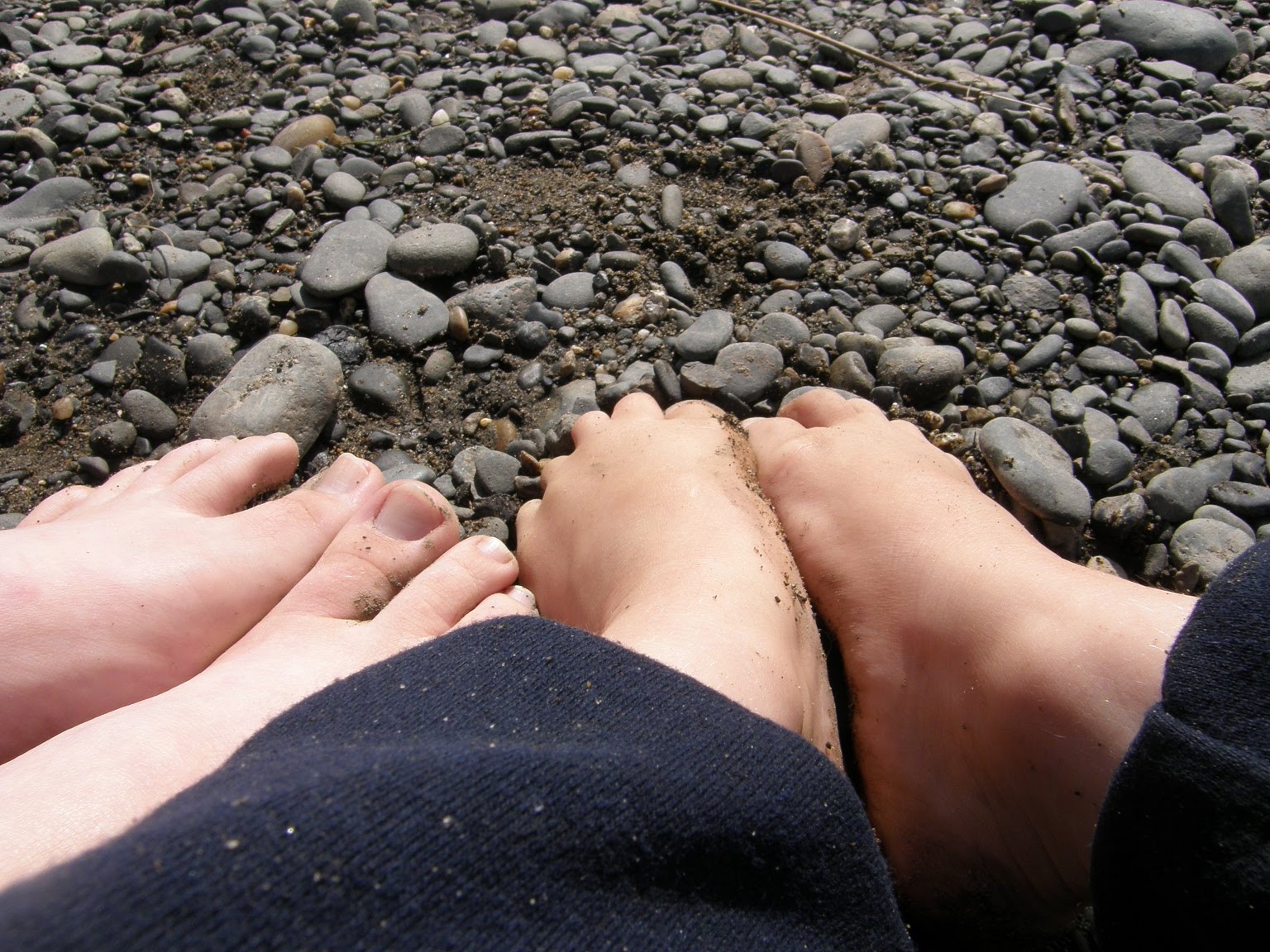
I got my toes into the earth... Ahhhhhh... (Bear is a hardcore barefooter, and since my shoes were wet from crossing the beach I joined him.)

And Wolf and Hubby dug us a bunch of razor clams. (Which, if you want to eat razor clams, you boil then for 10 seconds then drop them in ice water--that opens them up and also kills them pretty humanely--it's better than trying to cut them up without boiling them!)


For the record, I didn't like clams before, and now that I've gutted and carved a few dozen clams, I have no intention of ever eating one again. (Did you know they poop through their foot?!) Hubby and Wolf can have them all. But I guess that's ok, because they caught them.

Monday, August 30, 2010

Thank You Sockeye

I have said before that I believe in sustainable eating--in only taking what we can (will) use, and then in using all the parts of the animal (or, in making sure that all the parts are used, even if we don't use them all personally). I also believe in conscientious eating--that is to say, I believe in being grateful not just to the Lord for providing the food, but also to the animal who gave his life for our sustenance. Ancient tribes would give verbal thanks to the animal when they killed it, and I think that is a tradition worth remembering.
While I have not been present for the actual deaths of the 27 sockeye (red) and 2 pink salmon that Hubby has brought home this summer, I have done some of the cleaning and most of the filleting. I have tried to treat each fish with respect. To observe their beauty, to cut them carefully and not waste any meat. The guts and heads and other parts we don't use we try to either throw into the river at the time they are caught, or use for bait or throw back to the river or sea later on. We smoke or freeze the meat with the skin on, but since we don't eat most of the skin (Wolf likes to eat it sometimes), we give that to our dog. As I said, we try to respect the animal, and to waste no part of the life he gave to us.
I asked Hubby to take some pictures of a particularly big and beautiful fish so that I could document this side of our lives.
Look how big this guy is! Wash him off (Hubby guts them on site when he catches them).


Isn't he beautiful? I mean, he's a fish, and yeah he's a little slimy, but the colors on their heads and backs are so beautiful.
Take off the head, right behind the first fin (cutting as close to the fin as possible, so as not to waste meat). I find it hard to make that first cut--probably because that eye is looking back at me. But taking off the head (pardon the expression) dehumanizes the fish enough that I can do the rest. It is HARD for me to slice these guys open. Hard to think that we took a life. Sure, I know this was a spawning salmon and that it would have died within another week or so anyway, but still, we're responsible for his death, however slight it was in it's prematurity. That responsibility keeps me determined to use every bit of the meat.
Two very fat salmon fillets. As I'm taking the meat off the bones I often end up with little bits that didn't slice nicely--little scraps and bits. (I had a lot of those bits at first, I don't make so many now.) I collect all those together as well, and when I have a couple of cups I chop them up and use them to make salmon burgers or quiche or something like that.
I took a life to sustain my own; I must not waste it.

Friday, August 13, 2010

Frugal Friday: Preserving Food

First and foremost, if you buy things fresh and preserve them yourself (rather than buying frozen/canned food) you are already saving money. You are also giving yourself and your family healthier foods because you are not using preservatives and other additives to your canned or frozen goods.
BUT, there are so many fancy products now for preserving foods that it can feel overwhelming (and expensive) to even try! Vacuum sealers? Waterbath or pressure cooker? Food strainers? Cherry pitters? Apple peeler/corer/slicers?! How about just the canning accessory kit (on amazon.com for $15!) A lot of those specialized things are helpful (I actually have a canning kit much like that one, and I make good use of it) but they are not necessary (I helped my mom bottle food for 15 years without a rubber-coated bottle lifter thank you very much!)
Here are a few things to ease your way (and if you have other ideas, please share in the comments!)

GENERAL
  • The simplest way to save money is to borrow equipment! During canning season many people who own the equipment will be using it, but sometimes you can find someone who isn't using them, or at least is willing to lend you things for a few days, or to get together with you to process your food.
  • Check out garage sales and thrift stores...equipment (or especially jars) are often available there.
  • Ask around! Lots of people are happy to pass on things for free. I have accumulated several dozen canning jars by making my interest known and being willing to go pick them up from whomever had them. I got two dozen jars AND a steam canning processor when a woman at church passed away and I was the only person in the area that her daughter knew would use the equipment!
CANNING
  • Remember that low-acid foods (beans, meat, etc) must be canned in an actual pressure cooker to be safe, but otherwise you can get by with a steam canner or waterbath (or a makeshift waterbath!)
  • If you have a big, deep pan, you can use the waterbath method of canning--you don't need the special pan. You just need a pan that is big enough to put in several jars with space between each of them, and deep enough to get water about 1 inch above the top of the jars. Place a towel in the bottom of the pan to keep the glass jars slightly off the bottom of the pan (it helps the heat circulate more evenly, and also helps prevent bonking/breaking). I use an old stained hand towel. I used a second hand towel or washcloth in the center of the pan with the corners pushed between the bottles a bit to help avoid their banging against each other.
  • Fit as much as you can into each jar. Once you've filled it, put your foot up on a stool or chair rung and thump the jar against your leg to get the food to settle (put a hand over it so you don't throw food everywhere!), then fill in the top again.
  • Buy canning lids separately from the rings. You only need a few rings, because you can reuse them year after year. I store mine on an old wire hanger like this The lids alone are much cheaper than the lid/ring combos. ☺
  • Save glass mayonnaise jars if you like (they work fine for canning even though they look slightly different), and definitely save the mayo lids!! You can use those lids on opened bottled food, since once the seal is broken then the canning lid isn't much good anymore. (You can also buy plastic screw-on lids specifically made to fit on canning jars.)
  • If you don't have a fancy jar-lifter, you can use a potholder or folded over washcloth or handtowel. Do be careful if you're doing this with a waterbath because wet fabric will get very hot... I use a mug to scoop out some of the water from the top of the waterbath before removing the jars.
  • If you don't have a funnel, go get one. ☺ If you don't have a good funnel it will be harder to get things into the jar, but it can be done. You might want to use wide-mouth jars because (obviously) they have a wider mouth, and it's easier to get things into them.
  • I recommend using all one size jar mouths. Whether you have quart jars, pint jars, or half-pint jars, you can get them with wide or regular mouths. If all your jars have the same size mouth, then you won't need to have two sets of lids/rings.
FREEZING
  • Again with the borrowing--vacuum sealers are expensive, but the bags aren't too much, and you might be able to borrow a sealer and just buy your own bags.
  • Old jars (plastic or glass) can be used to freeze things. If the item you're freezing has liquid content, then be sure to put the lid on loosely for the first day, then go back and tighten them after the liquid has expanded (otherwise you will have broken jars and big messes all over your freezer!)
  • If you're going to use ziploc-style bags, get the good ones. Cheap bags break or don't seal well and you'll end up losing your food. It's worth the small extra expense up front to have quality storage containers! I like the double-seal brand-name freezer bags (like ziploc or glad). I also recommend against the 'zipper' style bags with the sliders, as they do not give an airtight seal.
  • When freezing fruit--especially something like berries--wash it, then set it out on a cookie sheet or towel to dry before you bag it. You may even put it in the freezer on that cookie sheet just for an hour or so, and then bag it. This will help prevent it from freezing into a gigantic solid blob. ☺
  • "Fruit Fresh" will help fruit maintain its color when frozen. It is available near the pectin or other canning supplies. About 1Tbs of fruit fresh is mixed with a little sugar and then sprinkled into the chopped fruit before freezing.
  • Freezer jam can be frozen in any container that has a secure lid. It is preserved by being frozen, NOT by being sealed, so you do not need the rubber-sealing ring that canning jars/lids have. I save condiment jars (even baby food jars!) and use those for my freezer jams. (Pickle jars tend to have too strong an odor for jams, but plastic peanut butter jars are good.)
  • For meat--except maybe ground/shredded meat--put it in a ziplock, and then add water in with it. (Over the sink!) gently squeeze it up toward the top until the water is spilling out, then seal it without letting any air get back in. This will prevent freezer burn since the meat is sealed in ice, so it's air-tight.
SHELF STABLE GOODS
  • I save containers--all kinds of containers. If it has a lid that screws on, I keep it. I love glass containers, but I use plastic too--there is something to be said for size, and a LOT of things come in big plastic bottles.
  • When I open a 50lb bag of flour, I pour it into smaller containers--5 gal plastic buckets if I have them, but also the 4lb (about 1gal) peanut butter jars, jumbo-size metamucel jars, and so on. I store pasta, wheat, sugar, oats, rice, and all sorts of dry goods in those big containers.
  • Do be careful of labeling or else you'll do what I did and use 2 cups of salt when you wanted 2 cups of sugar!! I use a little piece of masking tape to label each one--easy to remove if I use it for something else later.

In the interest of full disclosure...and maybe a teeny bit of boasting, yes, all the preserved food pictured here is from what we've put up this year: peaches, fireweed jelly, blueberries and rhubarb, salmon, and apricot freezer marmalade. ☺

Wednesday, March 31, 2010

The World According to Monsanto


We recently watched the documentary The World According to Monsanto (watch it here, read other reviews from TwilightEarth and Greenpeace). It was originally in French (it was dubbed) and for someone who doesn't read or speak French that is a little distracting because of some of the visual aspects (which I'll explain in a moment).

There is a lot of information in this film. It is packed full of primary source interviews--meaning interviews with people who were there, not just people who heard about it later. There is not a very smooth flow to the film though; it sortof jumps from one thing to the next. The overall message is clear: that Monsanto is and has been doing very shady things with our food production, from bovine growth hormones (rBGH) to roundup-ready seed to suing farmers out of everything they have. Most of the information was not new to me, as I had learned it from other sources (notably The Future of Food), but while FoF focuses on Monsanto's effects on the USA, this film spent more time on the international ramifications, including the way the company is making small independent farmers from Paraguay to India dependent on buying their seed and herbicides and is pushing monoculture (to the destruction of the traditional small family farms). It traced the infiltration of Monsanto's roundup-ready corn hybrid into Mexico's ancient corn strains, and showed photos of the truly disturbing results (if you know anything about how corn is supposed to look, these photos will give you chills).

The downside of this film is that it feels like an amateur movie. The numerous interviews and world traveling indicate a big budget, but the main transition method in the film is a woman (the filmmaker) sitting at her computer and googling various terms such as "monsanto rgbh falsify study" and so on. Yes, googling. In French. So that was a little distracting for me. The rest of the content was great, but the transitions (and there were many) were annoying.

In general, I do recommend the movie because of the content (which does go above and beyond other food documentaries I've seen). Just be warned that it doesn't have as polished a feel as some other documentaries.

Monday, March 1, 2010

A "Crunchy" Mama

(I started this post a looong time ago, then I got morning sick, then I didn't get around to finishing it...but I still wanted to post it so here goes!)


So, I labeled myself as a crunchy mama, then Jenn over at BabyMakinMachine asked me what it meant, so I tried to explain, and it led to her writing this post in which she pondered crunchiness and whether it was for her. That post then led to nearly 50 comments (most of them lengthy and some of them quite heated)... and I concluded that I was gonna just lay it all out.
I think Jenn put it quite fairly when she suggested that perhaps there's a middle level, somewhere between 'crunchy' and 'soggy' (or mainstream) which might be called 'chewy.' I find myself chewy in a number of things, because I'm not nearly so far off the beaten path as many of my uber-crunchy friends. On the other hand, I'm pretty far off the beaten path!

My reasons for being crunchy (or chewy) come from one main thing, and that is that I believe in questioning the status quo, and doing my own research about things, so that I can make my own decisions about what is best for me and my family. Again and again I discover that mainstream practices were born of the greedy side of capitalism (not that capitalism is evil in and of itself, but the associated greediness certainly is...) and that the things that really seem best are falling into this category called "crunchy." Here are my few basic tenets:
  1. I believe in not messing with the way God made things.
  2. I believe that Godmade is better than manmade, and should be utilized if available.
  3. I believe in avoiding unnecessary interventions/chemicals
  4. I believe in respecting people and the Earth.
  5. I believe in logic
  6. I believe in making things cheap, easy, and comfortable unless there's a good reason not to (you got it folks, I'm lazy!).
So what does this mean?

I believe in not messing with the way God made things
  • My body gives me signs every month of what is going on with my fertility, so I observe them and take notes rather than trying to control or change them.
  • My body makes milk for my baby, therefore, I should give it to the baby.
  • God made baby boys with foreskins. End of discussion.
  • If you're gonna drink cow milk (which is actually made for baby cows you know), then at least drink it whole, or even raw. Its vitamins are fat-soluable, so if you want the nutritive benefits of it, you'd better be getting the fat with it. Oh, and the low/no-fat versions have petroleum in them, just FYI.
  • God made some people women, and some people men, and then He gave them each bodies built to fulfill certain roles, therefore I birth and nurture children and keep our home, while my husband provides for and protects our family.

I believe that Godmade is better than manmade
  • So infant formula is only for emergencies, not for the average baby.
  • Food out of the dirt or off a tree = good, food out of a box = not so good.
  • If there's an herb that fits the bill, then I don't want some chemically formulated pill. Ideally I'd like nothing at all.
  • I think HFCS (high fructose corn syrup) is bad news...I'm trying to restrict it in our diet, though I doubt we'll manage to remove it entirely.
  • Partially hydrogenated anything = evil
  • I believe in butter. Margarine is the devil (also it tastes like BLECH).
  • I've recently found that I vastly prefer natural fibers (cotton, wool, hemp, bamboo) over almost all of the synthetics. Especially now that Eagle seems to break out when he wears synthetics.
  • I don't typically wear makeup--I wear the face God gave me.
I believe in avoiding unnecessary interventions and chemicals
  • The vast majority of women's bodies can give birth without intervention, so they should be allowed to do so.
  • If my child is exploring, I don't get in the way unless injury is imminent.
  • If (older) kids disagree, I try to help them work it out, rather than stepping in and taking over.
  • I think that antibiotics are making superbugs, so I don't use antibacterial soaps or products in my home, and would not seek (or take) a prescription for an antibiotic unless there were a good reason for it (such as post-surgery).
  • I don't wear makeup (most of it is toxic to some degree)
  • I don't use scented soaps/lotions/shampoos/detergents.
I believe in respecting people...
  • I try to boycott companies that treat their employees badly (such as Walmart)
  • My children do not call adults by their first names. If an adult is more than a few years older than myself *I* usually do not call them by their first name.
  • I think it's offensive to do cosmetic surgery on an infant boy's private parts without his permission.
  • I follow my infant's schedule, rather than demanding that he follow mine.
  • I don't let a small infant cry. I don't let an older child cry for long.
  • I try to be gentle and respectful in my parenting.
  • I try to take care of myself by eating (relatively) well and dressing modestly
  • If I can tell that my infant needs to poop, I often remove his diaper and hold him over the toilet. There's no reason to force him to sit in his own waste for even a moment if I can help it.
...and respecting the earth
  • I try to support local farmers, and sustainable farming practices
  • I recycle
  • I buy second-hand if I can
  • I re-use or re-purpose things because I don't throwing away good fabric/wood/etc
  • I try to be minimalist
  • I try to stock my kitchen (and my kids' toyboxes) with things that will last--things made from wood, metal, or glass.
  • I use recycled packaging when I mail things
  • I use cloth diapers, wipes, rags, etc. (I do use cloth pads, but this was a very secondary reason for it--the primary reason is below)

I believe in logic
  • I make milk + baby is hungry = give the kid a boob!
  • I need sleep + baby needs sleep + baby needs to eat during the night = let's all sleep in the same place
  • Babies like to be held + mommy needs to get stuff done = babywearing
  • Children learn by example, therefore I should be gentle with them if I want them to learn to be gentle with me or anyone else.
  • I see the sense in some vaccines (though not all) but I also see the dangers...so the ones we get we get on a spread-out schedule.
I'm lazy, frugal, and like my comforts
  • I use cloth pads and cloth diapers because fabric is more comfortable than plastic on tender parts.
  • babywearing is cheaper and easier than strollers and carriers (and doesn't require smooth sidewalks, of which we have precious few here!)
  • I re-use or re-purpose things because I don't want to spend the money to buy new ones.
  • I don't wear makeup--I've got the face I've got and if you don't like it then don't look, I'm not going to paint it for anybody.
I'm sure there are other things, but this is what comes to mind off the top of my head. ☺

Come back tomorrow and hear about my "soggy side"

Tuesday, February 9, 2010

What we ♥ about cloth diapering

In honor of Valentine's Day, this week I am posting a few "why I love ____" lists. Starting today is cloth diapers--this was collected from the mamas on the etsy cloth diaper team--a list of why we (as cloth diaper makers) love using cloth diapers for our little ones. ("LilBees" is me)

We love...
  • Knowing that my baby is comfortable in soft fabric rather than rough paper or sticky plastic. (LilBees)
  • How soft they are on my babies bum. (PudderPals
  • Two words: "Bamboo velour." If you've ever touched it you understand! (LilBees)
  • That they aren't made of paper products ☺(Suzanne'sSpecialKids
  • That they are not crinkly or smell like fake baby powder (WinkyDinks)
  • That they don't smell like chemicals when they pee in cloth diapers. (LittleMooseDiapers)
  • That I can use the same diaper over and over, even for multiple kids. (LilBees)
  • That they are a conversation starter (WinkyDinks)
  • How cute they are - its another part of their outfit (WinkyDinks
  • How cute and fluffy it makes my little one's bum. (PudderPals)
  • Having something cute on their buns ☺ Disposables are not cute... (3MonkeysClothDiapers)
  • That I get to be creative and make whatever I think is cute into a butt cover to use over and over and over...(Chelory Boutique)
  • Having a favorite diaper, and getting to use it over and over and over... (LilBees)
  • Being able to pick and choose which cute item they'll be wearing on their bum! (LittleMooseDiapers)
  • That they like their diapers and choose which one they want to wear next. (3MonkeysClothDiapers)
  • That even though my diapers are OSFM (one-size-fits-most) the absorbency isn't. I can have light absorbency one day and then bump it up the next. (PudderPals)
  • That it doesn't matter if the baby pees/poops mere seconds after I put on a new dipe because I can just toss it in the wash, I'm not out 50cents for 5 seconds of use. (LilBees)
  • That since I have twins, can I just tell you how much money I have saved by cloth diapering???? (3MonkeysClothDiapers)
  • That since I've had one or another in diapers for the last 3 years, with another one coming soon...all the money we've saved has allowed me to stay home with the children! (LittleMooseDiapers)
  • That I don't ever run out of diapers! (PudderPals)
  • That I don't have to plan ahead to make sure that I never run out of diapers...if I'm running low I just throw them in the wash. ( LilBees)
  • That they can be made to look like real undies (Suzanne'sSpecialKids)
  • That they can be completely customized for my special needs child (Suzanne'sSpecialKids)
  • That they add a bit of "typical" to a special child's life ☺(Suzanne'sSpecialKids)
  • That I have made my children's diapers with my own hands...there is a sense of independence and accomplishment in that. (LittleMooseDiapers)
  • I am always super proud to say, yes I made that!! (3MonkeysClothDiapers)

Sunday, September 6, 2009

The Politics of Diapers

If you've never considered cloth diapering, here is a little background about disposables...it may encourage you to re-think your decision! (Especially since cloth diapers no longer require pins, separate plastic pants, or dunking & swishing in the toilet...they're easy, cute, trim, cost-effective, and oh yes, environmentally responsible. ☺ )

I just highlighted a few points (since I know you'll probably skim rather than actually read the whole thing!)


Published in Mothering Magazine issue 116, Jan-Feb 2003

1961 Proctor and Gamble (P&G) introduces Pampers.

1971 Pennsylvania Boy Scouts conducting a highway cleanup campaign report that the largest single source of litter is the disposable diaper. Disposable diapers contribute 171,000 dry weight tons of waste to be processed by US sewage systems. (M. A. Shapiro, Preliminary Study of the Environmental Impacts from Processing and Disposal of Diapers)

1975, February In comparing the effectiveness of several brands of disposable diapers, Consumer Reports notes that trees are cut down in their manufacture, enteric (intestinal) viruses and live polio viruses from vaccines have been found in feces in disposable diapers removed from "sanitary" landfills, flushing diapers can ruin septic tanks and plumbing lines and damage sewage-treatment plants, and only commercial incinerators can safely burn disposables.

1975, July Wildlife-management personnel complain of the increasing presence of throwaway diapers improperly disposed of in parks and preservation areas. In North Carolina, a marine biologist reports that raw sewage spilling from pipes clogged with disposable diapers is killing fish. (The Sentinel, Winston-Salem, July 31, 1975)

1975 "The presence of viruses in untreated human fecal matter in solid waste disposal sites originates largely from the increased, wide-spread use of disposable diapers, which often send feces to landfill sites rather than to the sewage plant. Small children and babies excrete large numbers of enteric viruses in their feces, and viruses from landfill sites might be leached out and contaminate underground water supplies." (Baylor College of Medicine)

1975 The EPA warns that rainwater washing through dumps may carry viruses-which can live in compacted solid waste for up to two weeks-into underground streams, and from there into public and private water supplies. Improved sanitation during this century has made rare the diseases associated with direct contact with raw sewage: hepatitis A, shigella, salmonellosis, amebiasis, and typhoid. However, the University of Oregon Survival Center notes that outbreaks of shigella, salmonellosis, and hepatitis A are now more common in hospitals and daycare centers. The World Health Organization has called for an end to the inclusion of urine and fecal matter in solid waste.

1978 The Office of Appropriate Technology of Lane County, Oregon, takes three random samplings from a sanitary landfill and finds that disposable diapers comprise 16 percent, 26 percent, and 32 percent of the garbage extracted in each sample.

1979 Pediatrician Dr. Fred C. Weiner, of Montreal, Canada, studies one-month-old babies brought to a well-baby clinic for a period of one year and finds that disposables cause more frequent and more severe diaper rash. He advises limiting their use. (Journal of Pediatrics 95, September 1979)

1979 Oregon Senator Mary M. Burrows co-authors the state's first proposed bill to ban the sale of disposables.

1981 Testimony on behalf of HB3047 and HB2838, the Disposable Diaper Ban Bill, before the Oregon House Energy and Environment Committee of the Legislative Assembly: "Valuable wood pulp goes into the manufacture of close to ten billion diapers annually. This represents in excess of 800,000,000 pounds of paper. All of this paper is used only once and thrown away. It cannot be recycled. Yet, the timber industry doesn't have enough allowable cut at the same time that the public is increasing its use of recreational timberland and is clamoring for more. We cannot afford to sink our valuable and diminishing natural resources into throwaway diapers. Industry sources claim that disposable diapers require less energy than rewashing reusable (cloth) diapers. These claims must be rejected out-of-hand. None of these energy use figures include the costs of sewage treatment or solid waste hauling and management, to say nothing of long-term costs of directing natural resources from other uses."

1986 "Over 40 percent of newborns in US hospitals are diapered in Ultra Pampers. In addition, the diaper has received a highly favorable response from pediatricians. In fact, within the first five months of introduction, over 25 percent of your colleagues reported that they had recommended Ultra Pampers to parents of diaper-age children." ("Dear Doctor," a brochure enclosed in Proctor and Gamble's Medigram, November 7, 1986)

1987 US disposable diaper revenues total $3.2 billion. 82,000 tons of plastic and 1.3 million tons of wood pulp-about a quarter of a million trees-are consumed annually in the production of disposable diapers.

1987 The Empire State Consumer Association petitions the Consumer Product Safety Commission, the Food and Drug Administration, and the New York State Attorney General's office to prohibit the sale of synthetic super-absorbent disposable diapers and adult incontinence pads. The chemicals used in synthetic super-absorbent products contain sodium polyacrylate, cross-linked with polymers to create super-absorbent components. These chemicals can cause severe skin infections and, rarely, toxic shock syndrome.

1988 Proctor and Gamble pay $120,000 for a three-year study at the University of Michigan to determine the effects of sodium polyacrylate in disposable diapers once it enters a landfill. The researcher says that the study shows that disposables are environmentally safe. (UPI, July 28, 1988)

1989 EPA estimates that single-use diapers account for 2 percent of all solid waste in US landfills. A Seattle, Washington study finds that 1.8 percent of its municipal garbage is made up of diapers.

1989 In a study commissioned by the National Association of Diaper Services (NADS), Carl Lehrburger of Energy Answers Corporation, a resource recovery company in Albany, New York, estimates that parents pay ten cents in disposal costs for every dollar spent on throwaway diapers. With 18,000,000,000 soiled diapers being hauled to the landfill every year, Lehrburger figures that American mothers and fathers spend $300 million annually on disposable diapers that take 500 years to decompose. Throwaways comprise 2 percent of the nation's solid waste by weight, making them the third most common solid waste item after newspapers and beverage and food containers. Even if all 18,000,000,000 of the single-use diapers disposed of annually in the US were biodegradable, the public would still spend $300 million each year for their disposal. Each family that chooses cloth diapers for their child prevents one ton of waste from entering the solid waste stream each year. (Diapers in the Waste Stream, 1989)

1989 Dioxin is produced when chlorinated compounds, such as chlorinated plastics, are burned at high temperatures. Dioxin is formed when paper and wood pulp are bleached. The bleached pulp is then converted into a variety of paper products, including disposable diapers. Dioxin has been associated with cancer, liver disease, miscarriage, immune-system depression, birth defects, and genetic damage in a variety of laboratory animals. The fatty tissue of the average person living in the industrialized world harbors measurable levels of dioxin. When Proctor and Gamble faces the possibility of losing its share of the Swedish diaper market because of that country's curtailment of chlorinated pollution levels, the company begins making chlorine-free Pampers for export. ("Whitewash: The Dioxin Cover-Up," Greenpeace 14, no. 2, March/April 1989)

1989 "Diapers are a good target for waste reduction advocates because with the exception of newspapers and beverage containers, they are the single consumer product that contributes the most to solid waste stream." (Positive Steps towards Waste Reduction, June 1989)

1989 Diaper services, which almost disappeared in the late 1970s because of the introduction of the throwaway diaper, increase business by more than 70 percent as a result of hundreds of news stories on environmental concern and the growing demand for reusable cotton diapers. The National Association of Diaper Services (NADS), trade organization for the $150 million yearly diaper-service business, has about 400 members. Another $50 million is generated yearly by the manufacture and sale of cloth diapers.

1989, June Gerber, Childrenswear, and Dundee Mills, major US manufacturers of cotton diapers, lobby for quotas limiting cotton-diaper imports from China-producers of the world's best and most durable diapers, the ones that diaper services use. According to some critics, the quota on Chinese imports creates a cloth-diaper shortage and kills competition. Some services have to create waiting lists of prospective clients. NADS does not take a position on the Chinese quota, but does make an agreement with Gerber "to do nothing to denigrate Gerber's current sales level for one year." Gerber contributes $80,000 to NADS in 1989 and $60,000 in 1990. (San Francisco Examiner, June 7, 1989)

1989, June Proctor and Gamble announces two pilot programs designed to test the feasibility of recycling its millions of disposable diapers and to show that composting "is a viable disposal method for municipal solid waste." One pilot program is in King County, Washington, where the King County Nurses Association has been working to educate hospitals and parents about cloth-diaper alternatives, and where 20 of the county's 34 hospitals have switched to cloth in their newborn nurseries and pediatric units. The second program, a $250,000 composting demonstration project, is planned for St. Cloud, Minnesota, a city that already recycles two-thirds of its trash. According to a Proctor and Gamble spokesperson, "Our aim is not to get into the recycling business on a permanent basis. Rather, we want to demonstrate that the technology is feasible and encourage entrepreneurs to get involved in this business." (Proctor and Gamble press release, "Perspectives on Disposable Diapers," June 20, 1989)

1989, July Connecticut begins to phase out the use of disposable products, including those used in patient care. Oregon is in the process of extending a 50 percent recycling credit to diaper services. New Jersey legislates a tax on the manufacture of "disposable, 'one-way,' nonreusable or nonreturnable products." Connecticut and New York consider requiring manufacturers of single-use diapers to affix labels to all diaper products, stating the environmental hazards associated with their disposal. Nebraska bans the sale of all nonbiodegradable diapers effective 1993. (Press Release of the National Center for Policy Alternatives, July 19, 1989)

1989 Contra Costa County, California, sets a December 1990 deadline to begin recycling throwaways; otherwise, a ban may be in order or purchasers may be charged with disposal fees. (USA Weekend, September 15-17, 1989)

1989 Kimberly-Clark, the second largest manufacturer of single-use diapers in the US, unveils a new line: Huggies Pull-Ups, training pants aimed at toddlers who are being toilet-trained and bedwetters.

1990, April 20th anniversary of Earth Day.

1990 Legislation is introduced in 24 states and dozens of smaller jurisdictions to reduce the use of disposable diapers. Between eight and nine of every ten US families with diaper-age children use throwaway diapers most of the time. While in polls US families overwhelmingly support a ban on single-use diapers, three out of four mothers do not want to give up disposables.

1990 Proctor and Gamble commissions a study by Arthur D. Little, Inc., a consulting firm in Cambridge, Massachusetts. The consultant finds that laundering a cloth diaper over the course of its lifetime consumes up to six times the water used to manufacture a single-use diaper. In addition, the study concludes that laundering cloth diapers produces nearly ten times the water pollution created in manufacturing throwaways. (Arthur D. Little, Inc., "Disposable Versus Reusable Diapers: Health, Environmental and Economic Comparisons.")

1990 Jeffrey Tyrens, associate director of the Center for Policy Alternatives in Washington, DC, criticizes the Arthur D. Little study for a math error that makes single-use diapers appear cheaper than they are. He also finds that the ADL study fails to account for the water used in flushing away fecal material from single-use diapers-a practice recommended by Proctor and Gamble and other manufacturers on their diaper-box labels. Other critics point out that the ADL authors did not use independent data but instead relied on information gathered by P&G and other companies interested in promoting single-use diapers.

1990 Proctor and Gamble uses the Arthur D. Little data in a letter sent out under the auspices of the American Paper Institute, of which it is a member. The "Dear Legislator" letter reiterates the conclusions of the ADL study but fails to disclose that the study was funded by P&G. This letter prompts a rebuttal, a "Dear Colleague" letter signed by six legislators who support bills to encourage greater use of reusable diapers. Branding the API letter "misleading," the legislators write, "The disposable diaper industry realizes it is in danger of losing market share for this very profitable single-use product. Faced with overwhelmingly negative public opinion polls, they have launched a pro-disposable campaign among state lawmakers and commissioned the ADL study expressly to discredit cloth diapers." ("Review of Arthur D. Little, Inc.'s, 'Disposable Versus Reusable Diapers,' " Update on Diapers, September 1990)

1990 Proctor and Gamble sends more than 14 million copies of a pamphlet to US households stating that their diapers can be effectively composted in municipal solid-waste plants. The pamphlet, "Diapers and the Environment," complete with discount coupons for Luvs and Pampers, cites a five-week study conducted by P&G in St. Cloud, Minnesota, in which diapers from 2,700 homes and 17 daycare centers were composted along with the rest of the city's garbage. The results, according to the brochure, were "very positive." As part of a broad campaign to promote the company as environmentally friendly, P&G sponsors ads in more than a dozen major magazines featuring photographs of seedlings grow ing in pots filled with dark, porous-looking earth. The ads claim that 80 percent of each plastic and paper diaper is compostable and can be converted into a "rich, high-quality soil enhancer that's good for planting baby flowers, trees and just about anything else that grows." By some estimates, the company spends $250 million in 18 months on advertising. The New York City Department of Consumer Affairs charges that P&G promotes its diapers as easily compostable, but in fact few consumers have access to adequate composting facilities. A Rhode Island state official demands that P&G remove the following misleading statement, which appears on boxes of free samples of Luvs dropped on doorsteps that spring: "This product is compostable in municipal composting units. Support recycling and composting in your community." Rhode Island has no such facilities for composting diapers.

1991 P&G's $750,000 disposable diaper recycling project in King County (see 1989, June; second entry) is declared a technical success but an economic failure, yet continues to be touted in brochures for Luvs and Pampers. (Seattle Times, January 25, 1991)

1991, January Sponsored by NADS, Carl Lehrburger and colleagues undertake the most detailed study to date: a life-cycle, or cradle-to-grave, diaper analysis. They find that throwaway diapers, compared with reusables, produce seven times more solid waste when discarded and three times more waste in the manufacturing process. In addition, effluents from the plastic, pulp, and paper industries are far more hazardous than those from the cotton-growing and -manufacturing processes. Single-use diapers consume less water than reusables laundered at home, but more than those sent to a commercial diaper service. According to industry data from Franklin Associates and the American Petroleum Institute, 3.5 billion gallons of oil are used to produce the 18 million throwaway diapers that end up in landfills each year. Washing cloth diapers at home uses 50 to 70 gallons of water every three days-about the same as flushing the toilet five times a day. A diaper service puts its diapers through an average of 13 water changes, but uses less water and energy per diaper than one laundry load at home. (Carl Lehrburger, Jocelyn Mullen, and C. V. Jones, "Diapers: Environmental Impacts and Lifecycle Analysis," January 1991)

1991, July The American Public Health Association and the American Academy of Pediatrics publish the recommendations of their joint Child Care Standards Project. After four years of debate and research, the groups conclude that "only modern disposable paper diapers with absorbent gelling material" meet the standards they suggest for daycare centers.

1991, July In the United Kingdom, the Campaign for Reusable Diapers, the Women's Environmental Network's first initiative, finds that all of the available research on the environmental impact of throwaway diapers had been funded directly by makers of throwaways. A London independent environmental agency, the Landbank Consultancy, is asked to review and evaluate the data. The Landbank Report concludes that, compared to cloth diapers, throwaway diapers use 20 times more raw materials, three times more energy, twice as much water, and generate 60 times more waste. Using the Landbank Report, the Women's International Network challenges Proctor and Gamble's environmental equivalency claims before the UK's Advertising Standards Authority (ASA). The ASA rules that P&G's claims are misleading. Under pressure from the press, P&G withdraws its claims.

1994 The Women's Environmental Network (USA) joins with other groups to demand a Federal Trade Commission (FTC) investigation of the single-use diaper industry, charging the industry with deceptive advertising of environmental and health outcomes. Proctor and Gamble pays out-of-court settlements to the New York City Consumer Protection Board and to the Attorneys General of at least ten states for misleading advertising claims related to the recycling and composting of Pampers and Luvs. Environmental groups nationwide, including the New York Public Interest Group and Californians Against Waste, present Earth Day Awards to cloth diapers. Environmental Action, in Washington, DC, gives the Environmental Citizenship Award to the more than 300 hospitals nationwide that have switched to cloth diapers in the past few years. (Wet Set Gazette, April 1994)

1998 Fewer than one in ten US and Canadian households use cloth diapers. Thirty-five percent fewer cloth diapers were produced in the first six months of 1997 as compared with 1996. NADS has 150 members, a 37 percent drop in less than ten years. Disposable diapers have gone up as a percentage of solid waste in landfills. In Seattle, disposable diapers have increased from 2.5 percent of all residential waste in landfills from 1986 to 1989, to 3.3 percent from 1994 to 1995. (Residential Waste Stream Composition Study by the Cascadia Consulting Group)

1998 Seattle Baby Diaper Service receives a subsidy from Seattle Solid Waste for the cost of diaper service for low-income families because it's cheaper to pay a diaper service than to haul the waste away. Certain cities in Germany and Austria subsidize the cost of cloth diapers. Each child in disposables costs the city roughly $400 in municipal waste costs yearly. Coupons of $50 to $100 per family toward the purchase of cloth diapers have increased cloth-diaper usage in certain areas of Austria from almost zero to more than 40 percent.

1999 A study, "Acute Respiratory Effects of Diaper Emissions," in the October issue of Archives of Environmental Health, finds that laboratory mice exposed to various brands of disposable diapers suffered eye, nose, and throat irritation, including bronchoconstriction similar to that of an asthma attack. Chemicals released from the diapers included toluene, xylene, ethylbenzene, styrene, and isopropylbenzene, among others. The lead author of the study, Dr. Rosalind C. Anderson, advises asthmatic mothers to avoid exposure to these chemicals. Asthma rates are on a sharp incline in the US and worldwide, particularly among poor and inner-city children. Six leading brands of cotton and disposable diapers are tested. Of these, three are found not to affect the breathing of mice: American Fiber and Finishing Co., Gladrags organic cotton diapers, and Tender Care disposable diapers. Cloth diapers are not found to cause respiratory problems among mice.

2000 German study links use of plastic diapers to male infertility. The mean scrotal temperature is significantly higher in all age groups during the periods of plastic diaper use. Plastic diapers seriously undermine the body's natural ability to keep the scrotum and testicles cool. The researchers call for further research on the impact of increased testicular temperature in infancy on later sperm production. ("Scrotal Temperature is Increased in Disposable Plastic Lined Nappies," Archives of Disease in Childhood 83, October 2000.)

Linked Within

Related Posts Plugin for WordPress, Blogger...