Showing posts with label excerpts from grad school. Show all posts

Thursday, April 5, 2012

On Assumptions and Attribution, or, In Defense of Wild-Eyed Idealism

"Wild-eyed idealism is noble, wonderful, and impractical. Because we ourselves do good, and because we so ardently want everyone to be good, we think that simple social legislation will enable them to be so. But people don’t do good. People are selfish, and if we don’t make them work, they won’t."
I recently received the following as part of a longer letter from a family member. I've heard this argument from several sources lately, and it seems prevalent among the politically conservative demographic. I'm studying social psychology this term though, and it seems that there is a scientific explanation for this perspective, as well as for my own.
So this was my reply.


Enter social psychology, and the note that the majority of people assume internal attribution for behavior. In other words, the natural human inclination (apparently) is to assume that a person is what he is and does what he does because of who he is (without regard to circumstances). They guy in line ahead of you is slow and bumbling because he's stupid, or lazy, or careless; not because he narrowly avoided an accident getting here, or because he just found out that his wife has cancer.

There are some people (apparently I am one, as I discovered in a class exercise), who tend to be willing to give people the benefit of the doubt, and allow for the possibility--even probability--of an external attribution.
The book discussed social politics, in particular the example of welfare, and noted that the typical conservative line is that poor people got there because they were lazy or uncaring (internal attribute), and that they would prefer to just mooch off the system indefinitely. The typical liberal perspective is that people are poor because of lack of education, layoffs, lack of access to training or employment, and other such external attributes. The opinion on that side is that, given a little help, and some opportunities, they will use the system for a time, but ultimately that they want to be independent and support themselves.

So they've collected some statistics. It seems that the average person on government assistance is there for about a year. Then they are gainfully employed and support themselves. I found it interesting that the statistics seem to point much more one direction than the other...

Now I realize that in many cases the real truth is probably somewhere in the middle--that most situations arise out of a combination of internal and external reasons. It's interesting how we displace though. Several members of our family have been unemployed or underemployed within the last few years, and (knowing the specifics), we have all given each other the benefit of the doubt. We have assumed that each was doing the best he could to be employed, and we have prayed for each others' success. I did not hear any judgments about getting WIC, unemployment benefits, medicaid, or food stamps (although I know several of us have done that). Why then do we assume that the people that we don't know are any different from the ones we do know?

Judge not that ye be not judged. For with what measure ye mete, it shall be measured unto you (Matt 7:2). Christ taught that, Elder Uchdorf just quoted him a few days ago, with the simple sermon, "Stop It!" Obviously, feel free to vote as you believe is best. But in the meantime, watch your words, and your deeds, and even your thoughts (Mosiah 4:30), because a judgment within your heart is still a judgment.
I dare say this injunction against judgment applies not just to the behavior of individuals, but also to their politics. I feel strongly about my idealistic stances, and I don't think they are impractical. They may be improbable for right now, but wasn't Jesus himself the original wild-eyed liberal idealist? Is improbability (or even impracticability) a reason to give up on those ideals? Jesus didn't. And I may be the most tenacious person I know.

Friday, October 14, 2011

Attachment Theory

This excerpt was from two different assignments, the first comparing an older developmental theory with a new one, and the second was to explain a developmental theory, along with primary people involved with it, and the strengths and weaknesses of the theory. Some information overlaps between the two parts, and since these are excerpts it won't always have nice pretty beginnings and endings. But a couple of people have expressed that they'd like to hear about these topics, so here goes. ☺


“Attachment is an integral part of human nature from the cradle to the grave” John Bowlby

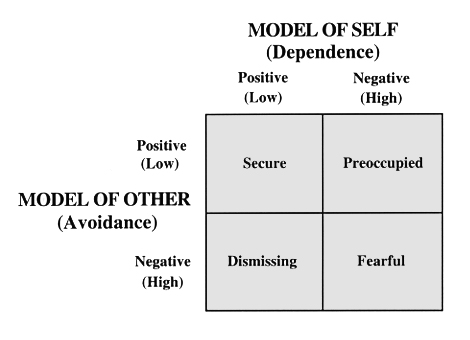
Erik Erikson’s psychosocial development theory posited that individuals progress through stages as they age. Within each stage, they face a crisis or choice, and the way in which they resolve it will affect them throughout their lifetime. John Bowlby took particular note of the “trust verses mistrust” conflict of the infant stage, and developed attachment theory. Attachment theory agrees with psychosocial development in the belief that development is affected by experience as well as biology. It specifically considers the way in which a small child interacts with his or her caregiver—and the way in which the caregiver responds to the child--in relation to the wellbeing and subsequent success of the child. Mary Ainsworth developed the “strange situation” study, which allowed researchers to empirically study attachment behaviors in infants. While Bowlby and Ainsworth’s research (as well as Erikson’s first stage) focus primarily on infant-to-caregiver attachment, some contemporary theorists are extending attachment theory to adult relationships as well.

“In the 50 years since Bowlby and Ainsworth’s initial work in attachment theory, its basic premises have become well recognized and largely accepted into mainstream psychology and into popular culture as well” (Berghaus, 2011). While studies such as Ainsworth’s give clear validity to attachment theory in infants, modern researchers disagree on whether it is appropriate to apply the theory to adults. Some theorists—as well as popular culture--do so readily, but Barry J. Berghaus does not. He cites studies showing that the attachment style of a person in infancy does not necessarily predict their attachment style as adults; in fact, the correlation ranges from .20-.50 (Fraley, 2010). Berghaus explains that “attachment theorists simply accept/presume that internal working models exist, and from there assume that internal working models have a causal relationship with behavior” (2011). So, in spite of the popularity of attachment theory, Berghaus maintains that attachment theory—at least in relation to adults--is actually more philosophical than empirically based.
-------------------------
Attachment Theory was named and first written about by John Bowlby (Bretherton, 1992), however both Mary Ainsworth and Harry Harlow made significant contributions to it by doing formal studies which validated parts of the theory (Bretherton, 1992; Harlow, 1958). It is a contemporary theory, with the earliest written works being published in 1958, and research continuing in the present day. Bowlby was unique at the time for suggesting that there was a “possibility of helping children by helping parents” (Bretherton, 1992); in other words, that children who were not developing ideally could show improvement if their parents responded to them more reliably or affectionately. Bowlby believed strongly in the role of nurture in human development, and emphasized social networks as well as the parent-child relationship, and “[called] to society to provide support for parents,” (Bretherton, 1992), but those parts of his theory have often overlooked or ignored by subsequent researchers, who have focused on one-to-one attachments. “Bowlby also took great pains to draw a clear distinction between the old social learning theory concept of dependency and the new concept of attachment, noting that attachment is not indicative of regression, hut rather performs a natural, healthy function even in adult life” (Bretherton, 1992). While some recent theorists argue whether attachment theory can appropriately be applied to adults (Berghaus, 2011), others have found positive correlations between secure attachment in early childhood and increased IQ scores, or secure attachment patterns in adult romantic relationships (Fraley, 2010). The correlations vary in strength, and thus they can be hotly debated.


Though attachment theory seems to apply for small children in cultures around the world (Bretherton, 1992), the percentages of children who develop each type of attachment varies, almost certainly due to cultural norms about parenting (for example whether the children are routinely left with a non-parent caregiver, or how often they are held). Since children in diverse cultures can still become healthy adults, one must question whether one style of attachment is necessarily better than another, or whether the important thing is simply for the parent to be reliably responsive to the child. Attachment theory might have a more universal application if the definitions of types of attachment were broadened.

One area where attachment theory does not seem to work is with autism. The “ideal” form of attachment (secure attachment) is defined in part as a child who experiences separation anxiety when the parent leaves, and seeks comfort from them when they return, but autistic children often refuse physical contact because it overstimulates them, and may prefer to be solitary, even when very young (Grandin, 1996).


Resources

Berghaus, B. J. (2011). A new look at attachment theory & adult “attachment” behavior. Behaviorology Today, 14(2), 3-10. Retrieved from
http://www.behaviorology.org/pdf/AttachmentTheoryBeh.pdf

Berk, L. E. (2010). Development through the lifespan (5th ed.). Boston, MA: Allyn & Bacon.

Bretherton, I. (1992). The origins of attachment theory: John Bowlby and Mary Ainsworth. Retrieved from http://www.psychology.sunysb.edu/attachment/online/inge_origins.pdf

Fraley, R. C. (2010). A brief overview of adult attachment theory and research. Retrieved from http://internal.psychology.illinois.edu/~rcfraley/attachment.htm

Grandin, T. (1996). Thinking in pictures: and other reports from my life with autism. New York: Vintage.

Harlow, H. F. (1958) The nature of love. First published in American Psychologist, 13, 673-685. Retrieved from http://psychclassics.yorku.ca/Harlow/love.htm


Laureate Education, Inc. (Executive Producer). (2010). Cognitive Development Theories. Retrieved from http://mym.cdn.laureate-media.com/Walden/CPSY/6215/03/downloads/WAL_CPSY6215_03_A_EN.pdf

Lifespan Learning Institute (Producer). (2009). John Bowlby attachment and loss. Retrieved from http://www.youtube.com/watch?v=VAAmSqv2GV8


Susskind, J. (2005). Social development. Encyclopedia of Human Development. Retrieved from
http://www.sage-ereference.com.ezp.waldenulibrary.org/humandevelopment/Article_n574.html

Wednesday, October 5, 2011

Infant Case Study

This is the first of several excerpts from my grad school papers that I will share here on my blog. We were asked to read a short case study about a two week old infant, Sam, and then discuss factors that may be affecting his development (both explicitly mentioned in the case study or which we can logically infer). I'm not sure if it's kosher to re-print the actual assignment, so I'll give a short version here:
Sam was born six weeks early via cesarean section. He received oxygen support at birth (though not since), and spent three days in the hospital. His parents, Jane and Roberto, are first time parents. They live in a rural area and do not have many friends or neighbors. Jane drank periodically throughout the pregnancy, but increased toward the end when Roberto lost his job. She has requested 12 weeks off work following the birth, but is considering returning to work sooner. Sam wakes to eat every two hours, but never eats very much and does not sleep through the night. Jane's mother has offered to come live with them for a while to help out.
I felt that we would be expected to write about FASD, but in spite of the obvious potential for it I thought it was unlikely. So I took a chance on a different tack.
The professor said "Excellent. You brought in a lot of relevant information from expert sources and included several things I did not know." And then he selected it as one of the model papers to share with the class this week.
Without further ado:

Given the premise that Jane was consuming alcohol during her pregnancy with Sam, it is easy to jump to the conclusion that he has Fetal Alcohol Syndrome Disorder (FASD). While that is a possibility that should not be overlooked (and it would be wise for both Sam’s parents and his medical providers to watch for symptoms over the coming months or years), the case study does not provide sufficient data to point to FASD as a likely diagnosis. However there are things which the case study does point to.

Sam was born six weeks prematurely, so his difficulty breathing in his first minutes of life can easily be attributed to having underdeveloped lungs. His respiratory struggles could also be attributed to his cesarean birth. The pressure of the process of vaginal delivery stimulates the infant’s circulation and respiratory systems (Berk 2010), and babies born via cesarean are as much as twice as likely to need oxygen support as are infants born vaginally (Kamath et al, 2009 and Yakov et al, 2006). The case study also does not indicate why Sam was born via cesarean section; it is possible that he was already under distress prior to delivery, and that could also account for his need for oxygen support immediately after birth. Particularly since he has not needed respiratory support since that time, it is not likely that he has any long term breathing issues.

Sam’s cesarean birth may be important in another factor, which is how Jane has attached to him. Hillan noted that women who deliver via cesarean often have a harder time connecting with and attaching to their babies, perhaps due to the separation they experience during the hospital stay (1992), the interruption of the natural hormonal cycles experienced during vaginal delivery, or to the stress or pain of the experience of major abdominal surgery. Berk also notes that “the appearance and behavior of preterm babies can lead parents to be less sensitive in caring for them” (2010). These difficulties, combined with Sam’s fussiness and her own postpartum hormonal changes, are probably exacerbating an already overwhelming time for Jane in particular.

It is normal for a child of Sam’s age to need to eat every two hours. Because his diet is wholly liquid (whether breastmilk or formula) it is easily digested. Easy digestion is important for a newborn digestive system, but it does mean that digestion is also rapid, and that Sam will be hungry again soon (Pantley, 2002). There is nothing abnormal about his wanting to eat this often, but if Jane and Roberto are not aware of the normalcy of this behavior in their child, it may be stressful or worrisome to them.

It is also normal for an infant two weeks old to wake up frequently in the night. At this age, it would be unhealthy for him to sleep more than four or five hours at a stretch, and that is significantly less than “all night” in the eyes of most adults. In fact, it commonly is “a full year or even two until [a] baby will settle into an all-night, every night sleep pattern” (Pantley, 2002). This frequent night waking, though normal and appropriate for Sam, can put extra strain on Jane, especially when she returns to work. Therefore it would be wise for them to consider ways to help Jane get more rest. One alternative might be to breastfeed and bedshare, which would allow Jane to sleep while Sam eats. Another alternative would be to have Roberto (or Jane’s mother) take care of giving Sam bottles when he wakes at night, so that Jane can sleep.

Jane and Roberto are clearly under a lot of stress. Not only was Roberto recently laid off, but Jane, like most other mothers in the United States, is probably unpaid during her maternity leave (Geissler, 2005). The sleep-deprivation of having a newborn, along with the probability of difficulty connecting to her fussy baby, all combined with the financial stress of their situation has probably left her feeling obligated to return to work before the twelve weeks are over.

The stress of Roberto’s lost job during the pregnancy led Jane to drinking, but it also would have elevated her cortisol levels. Elevated cortisol during pregnancy can lead to premature birth (Field & Diego, 2008). Sam’s precipitous arrival was probably a cause of stress in its own right, as they were probably not prepared for him to come a month and a half before his due date. Field & Diego also explained that “analysis on the mothers’ prenatal cortisol and the newborns’ cortisol levels suggested that the mothers’ prenatal cortisol was a significant predictor of the newborns’ cortisol levels,” and further noted that “infants of high prenatal cortisol mothers have shown temperamental difficulties such as crying and fussing” (2008). This fussy behavior was particularly noted during the first few weeks of life (Field & Diego, 2008). It is probable that Sam’s fussiness is due to high cortisol levels, a residual effect of Jane’s having had elevated prenatal cortisol levels.

Finally, Jane and Roberto desperately need some support in their new role as parents. Berk quotes findings stating that “babies who are both preterm and economically disadvantaged require intensive intervention,” and that the effective interventions include “parent training sessions” along with “medical follow-up” (2010) The case study made no mention of Jane and Roberto having taken any childbirth classes, and it is probable that, in their socio-economic situation, they have not taken any parenting classes or read parenting books. Not only do they need the moral support of friends and family, but they also need the mentoring of professionals or more experienced parents. If Jane’s mother can come stay with them, it would probably be very helpful for everyone for her to do so

It sounds as though Sam got off to a somewhat rough start in life (with his premature arrival, cesarean delivery, and need of breathing assistance). It also seems that Jane and Roberto, as first time parents with little or no experience or education about babies, are feeling overwhelmed with all the changes in their family. However, Sam seems to be healthy and normal now. The family and Sam’s pediatrician should watch him to see if any symptoms of FASD develop, since it is known that Jane was drinking, but he does not show any signs of it at the present. It would be good for Jane’s mother to come provide help and support for Jane and Roberto for a few weeks or months as they adjust to this new life, and ideally they should seek other friends in their area, perhaps other young parents, who can be part of a new network for them. If Sam does end up showing symptoms of FASD, then it will be particularly important for Jane and Roberto to have a network of support as they undertake raising a disabled child.


Resources

Berk, L. E. (2010). Development through the lifespan (5th ed.). Boston, MA: Allyn & Bacon.
Field, T., & Diego, M. (2008). Cortisol: The culprit prenatal stress variable. International Journal of Neuroscience, 118(8), 1181¬–1205.
Geissler, J. (2005, July 26). U.S. stands apart from other nations on maternity leave. USA Today. Retrieved from http://www.usatoday.com/news/health/2005-07-26-maternity-leave_x.htm
Hillan, E. M. (1992), Maternal–infant attachment following caesarean delivery. Journal of Clinical Nursing, 1: 33–37. doi: 10.1111/j.1365-2702.1992.tb00053.x
Mayo clinic (2011). Fetal alcohol syndrome: Symptoms. Retrieved from
http://www.mayoclinic.com/health/fetal-alcohol-syndrome/DS00184/DSECTION=symptoms
Kamath, B. D., Todd, J. K., Glazner, J. E., Lezotte, D., & Lynch, A. M. (2009). Neonatal outcomes after elective cesarean delivery. Obstetrics & Gynecology, 113(6), 1231-1238. doi: 10.1097/AOG.0b013e3181a66d57
Pantley, E., (2002). “Newborn babies and sleep.” The no-cry sleep solution: Gentle ways to help your baby sleep through the night. New York: McGraw-Hill.
Yakov, R., Yee, W., Yue Chen, S., & Singhal, N. (2006). Oxygen saturation trends immediately after birth. The Journal of Pediatrics, 148(5), 590-594.

Wednesday, September 28, 2011

Hello World

My posting here has slowed down. As I mentioned I am in grad school, but there is more to it than that.

Firstly, my classes, being web-based, do not have meeting times. This means that it is all reading and writing. My lifespan development class, for example, gives me 60-150 pages per week to read (and about 6 to write). Sometimes I think it would be easier to sit in a few hours of lectures, but honestly I am fascinated by this stuff and really enjoying what I am learning, time-consuming as it is.

Secondly, I care about how I do in the classes. I could slide through with minimums I suppose, but not only do I want to learn the material (that's the point after all!) but I have always had a good GPA and I'd like to continue to do good work. Having spent time as a teacher, I think it's a bit insulting to the teacher turn in poor work--especially if the teacher is any good. Thus it is that I am spending the time to try to do good work for these classes. The more critical of my teachers has given me extra credit twice in the last two weeks, along with this comment "You did an excellent job with this very challenging assignment. You infused information from psychological sources effectively and displayed a lot of high-level thinking." So I am feeling pretty good about that. (But since I'm writing for him, I'm not writing for you...unless you'd like to see what I've been writing?! I did a piece on the strengths and weaknesses of attachment theory last week.)

Finally, have I mentioned the babysitting? Naw, I didn't think so. This is my sixth week of babysitting a 2yr old (in addition to my own 4yo and nearly 2yo) 8-5 Mon-Fri. This is my second week of babysitting an additional 2yo and 4yo 9-5 Mon-Fri. Yes, that makes a total of two 4 year olds and three 2 year olds, full time. Plus, you know, all the standard mom stuff like making dinner and vacuuming and doing laundry and keeping the wood stove going and (occasionally) cleaning the toilet. (But not very often, because I truly hate cleaning toilets. You have no idea!)
I need to invest in a big box of crayons.
And in the meantime, I would love for you to leave grown up sorts of comments here for me. Because I spend much of the day talking to 2 year olds. ☺

Friday, August 26, 2011

Grad School

I was thinking about a masters degree in 8 1/2 years ago when I was student teaching.Then I got engaged and married and mothering a little boy took precedent over grad school. I didn't know if it was postponed or cancelled. I always figured I'd eventually take classes of some sort, simply because I love to learn new things, but I didn't know whether I would pursue a degree or not. However, Hubby and I began discussing the idea a few weeks ago (partly because he is taking some classes of his own, and there are some financial benefits to both being in school for a while), and I confess I jumped at it. I think it took me about 39 seconds to make up my mind that if I could find a good online program, I would go back to school.

8 years ago when I was looking at grad school, I wanted to study psychology. I had been interested in it ever since Psych 101 when I was 16. I think people and their minds are fascinating. Perception and culture and belief and the power of the mind over the body... 8 years ago, the masters programs I looked at would not accept me unless I had my undergraduate degree in Psychology (which I don't), so this summer I began looking at programs to get a BS in psychology. Online! That was the catch, of course, was that I needed to be able to do it online!! And then I found a MS program, which was online, which I could do regardless of what my undergraduate degree was in. And so I applied.

Here is an excerpt from my application essay:
I am currently in the process of becoming a doula and childbirth/fertility educator. Following my own experiences with infertility, pregnancy, miscarriage, birth, and breastfeeding, I knew that my teaching abilities could be well applied within these areas of women’s health. I have been doing this informally for some time, but am preparing to begin teaching formal classes as well. I feel that a degree in psychology will support me in these endeavors because these experiences are as mental as they are physical. I particularly hope to work with women who are experiencing crisis pregnancies, or have survived infant loss, sexual abuse, or other traumas, and I know that the mental facet of those situations will affect the physical experience of each woman I serve.

So, as of this week, I am officially a grad school student (I start classes the first week of September).
Plus all the regular fun of mommyhood and wifehood, holding down the fort, babysitting a second 2-year-old 45hrs/wk. Plus keeping up with The Amethyst Network, and actively working on pulling together my childbirth ed class curriculum, and doing my reading for my doula training...

And you expect me to still write blog posts? Oh yeah, this is me. Of course I'll still write blog posts. ☺ I just don't know how frequent they will be. Once or twice a week may be the norm. With that said, I also have been thinking I'd like to do the weekend Linky Roundups like I used to do. I share a lot of links on facebook, but I have been thinking that maybe on the weekend I should post the list of them here too. There are some great articles out there and it seems like there's not much point in my writing about things that someone else already wrote, right?!

Linked Within

Related Posts Plugin for WordPress, Blogger...